![Experienced HVAC, plumbing, and electrical services in [your location], providing quality heating, cooling, plumbing, and electrical solutions for homes. Reliable, affordable, and efficient home service provider.](https://adamhomeservices.com/wp-content/uploads/2023/05/adam-home-services-logo.webp)
Living in an older house means learning its particular habits, and in Havertown, Pennsylvania, one of those habits is how the place handles a heavy rain. The median construction year here is 1949, and roughly a third of local homes went up before 1940. If you own an original twin, cape, or stone colonial, keeping the lower level dry takes ongoing attention rather than a single fix.
Most of that attention belongs on the plumbing and drainage side. Exterior masonry and foundation crack repair fall outside our scope, and a waterproofing or structural specialist is the right call there. What our licensed professionals handle are the internal drainage issues that put water on a basement floor: the sewer lateral, the floor drain, and the sump system. A proactive approach to plumbing and drainage maintenance before the wet season is the practical way to stay ahead of all three.
Why Older Havertown Basements Take On Water
Haverford Township sits within the Darby Creek and Cobbs Creek watersheds. Naylors Run, a tributary of Cobbs Creek, runs through Haverford and Upper Darby with long stretches carried underground through culverts. That geography means the township moves a considerable volume of stormwater through a system laid out generations ago, and it maintains a stormwater management ordinance, Chapter 78, that sets out runoff responsibilities. When heavy rain arrives, the water has to go somewhere. Aging residential plumbing tends to absorb a fair share of the load.
Know Where Your Water Is Coming From
Standing in a puddle on the basement floor tells you very little about the cause, and the cause determines the fix. Water reaches an older lower level in three main ways:
- Foundation seepage: groundwater works through masonry walls or cracks in the slab. This is work for an exterior waterproofing or structural masonry specialist.
- A floor drain backing up: stormwater or wastewater comes back up through the drain in the basement floor. This is a plumbing problem, usually resolved with drain clearing.
- A backed-up sewer line: a blockage sends wastewater back toward the house instead of out to the street.
Getting the diagnosis right saves a wasted service call. Seepage belongs to a masonry contractor. A floor drain that backs up, or a compromised sewer line, belongs to a licensed plumber.
The Case for a Camera Inspection of Your Sewer Lateral
Your sewer lateral is the underground pipe that connects your house to the municipal sewer main. In a neighborhood where most homes predate 1960, plenty of those laterals are still original clay, and clay is vulnerable at the joints. Tree roots find the moisture, work into the seams, and once inside they catch debris and narrow the channel. A pipe already running at reduced capacity has little margin left when a storm pushes extra volume through it, and that is often when a backup turns up in the basement.
A camera inspection puts eyes on the actual condition of the line, so roots, cracks, and partial blockages surface before they become emergencies. Depending on what the camera finds, the fix might be rooter service to cut roots back, high-pressure hydro jetting to scour buildup off the pipe walls, or straightforward drain clearing. Any of those can improve flow well ahead of the next storm.
Upgrades Worth Considering
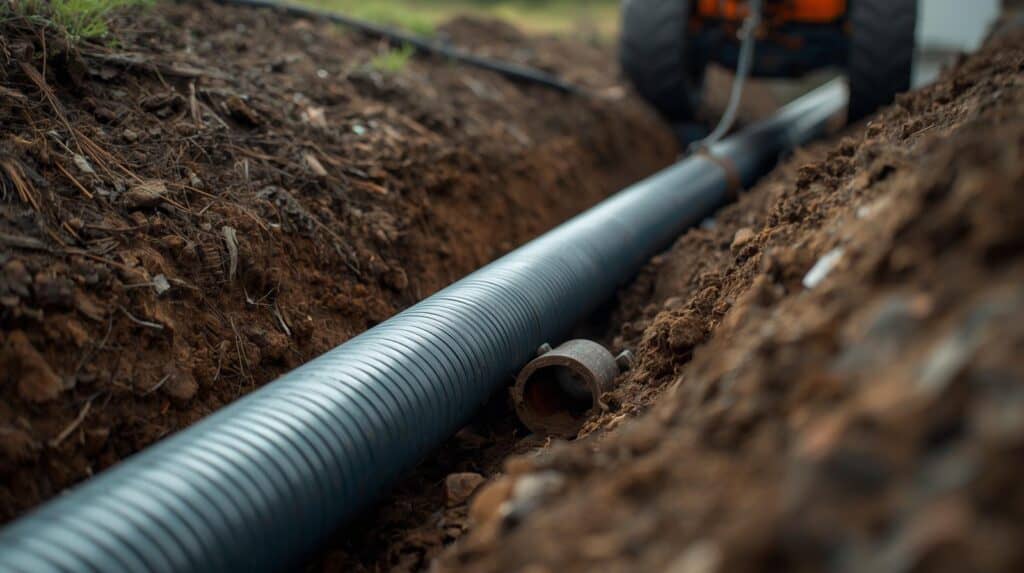
Clearing a line that is badly cracked or starting to collapse buys time rather than solving the problem. In that situation, replacing the lateral may be the more sensible route. Our team often uses trenchless sewer line methods, which replace the pipe underground without opening up the whole front lawn.
A backwater valve is the other upgrade worth a look in an older home. It is a one-way mechanical valve installed in the main sewer line that closes on its own if municipal sewage reverses direction during a severe storm. It can keep a backup from reaching your lower level, though it does need periodic inspection to keep working as intended.
Your Sump Pump Is a Maintenance Item, Not a Set-and-Forget Device
A sump pit is a basin set into the lowest point of the basement floor. It collects water that would otherwise spread across the slab, and the pump lifts it out and away from the house. Because a sump pump spends most of its life doing nothing visible, it is easy to assume it is fine. It is a machine with moving parts: motors wear, check valves stick, and float switches jam. Routine maintenance catches those things well before the night you actually need the pump.
The Value of a Battery Backup Sump Pump
Power outages and heavy rain tend to arrive together. A pump wired only to household current stops the moment the lights go out, which is usually the point of highest demand. A battery backup gives the system a dedicated second power source and several hours of continued operation. If outages at your address tend to run long, our generator options are worth reviewing for keeping the sump pump and other essentials running.
What to Do Before the Next Heavy Rain
A short walkthrough before the wet season gives you a reasonable picture of where your drainage system stands. Three checks are worth making:
- Pour a five-gallon bucket of water into the sump pit and confirm the float switch engages and the pump kicks on.
- Step outside and follow the discharge pipe. Water should be running away from the foundation, and the outlet should be clear of debris.
- Test the battery backup according to the manufacturer instructions to confirm it is holding a charge.
When to Bring in a Licensed Plumber
Managing water in a pre-1960 house is largely a matter of staying ahead of failures that are reasonably predictable. Inspections on a schedule, plus a few targeted upgrades, give you some say in where the water ends up. Adam Home Services has worked in this area since 2002, and our licensed professionals are familiar with how these houses were built and how their plumbing behaves under load. Our maintenance plan covers regular visits, or you can schedule maintenance and repair as needed.
Schedule Service in Havertown
The best time to find out your drains or sump pump need attention is before the season turns. Adam Home Services offers upfront pricing, 24/7 live answering, and same-day service from licensed professionals.
Phone: (484) 896-9197
Email: [email protected]
Address: 200 West Chester Pike, Havertown, PA 19083
Sources
Median year structure built, Havertown, PA. U.S. Census Bureau, American Community Survey, table B25035: data.census.gov
Darby Creek and Cobbs Creek watersheds. Township of Haverford: havtwp.org
Chapter 78, Erosion and Sediment Control and Stormwater Management. Township of Haverford: ecode360.com