![Experienced HVAC, plumbing, and electrical services in [your location], providing quality heating, cooling, plumbing, and electrical solutions for homes. Reliable, affordable, and efficient home service provider.](https://adamhomeservices.com/wp-content/uploads/2023/05/adam-home-services-logo.webp)
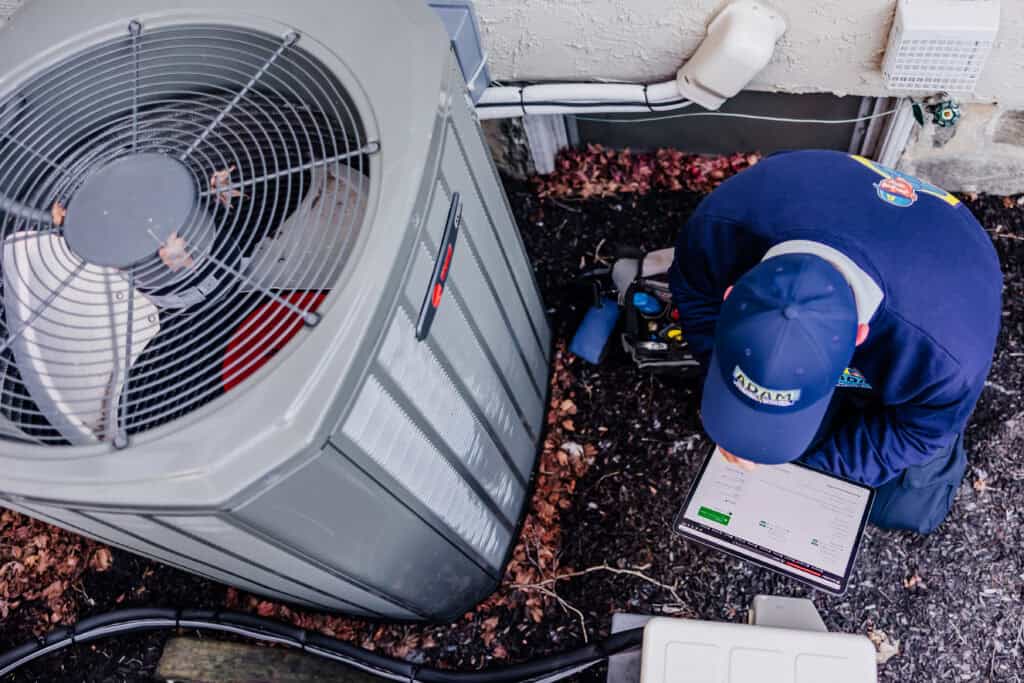
Was your air conditioner not keeping up with heat this summer? You were not imagining it. Over the July 4 weekend, Philadelphia hit 100 degrees or higher three days in a row. Those were the only three 100-degree days the city logged all year, and they came back to back. Across Havertown and Delaware County, cooling systems ran for hours at a time without ever shutting off.
When a system struggles like that, it is usually working past what it was built to handle. Here is why that happens, what you can check yourself, and when it is time to call someone.
Why an Air Conditioner Not Keeping Up With Heat Strains Mechanical Parts
Your system was sized for a specific outdoor temperature. Contractors use a method called Manual J, and it sizes equipment to a design temperature your area only passes about 1 percent of the hours in a year. That works out to roughly 88 hours. The same method assumes you want the house at 75 degrees inside.
So a 100-degree afternoon is already past the design point. Set the thermostat to 72 on top of that and the system has no chance to catch up. It just runs. Long run times are hard on a few parts in particular.
There is a related number people get wrong, so it is worth clearing up. You may have heard that an A/C should cool your home 20 degrees below the outdoor temperature. That is not what the 20-degree figure means. Technicians measure the drop across the indoor coil, comparing the air going into the return with the air coming out of the supply. A healthy range is roughly 16 to 22 degrees. The Air Conditioning Contractors of America (ACCA), the association that writes the sizing standards, cautions that even this is a rule of thumb rather than a fixed target.
Electrical Capacitors and Contactors
Capacitors store the energy that starts and runs your compressor and fan motors. Heat builds up inside the outdoor cabinet and breaks down the fluid inside them. Contactors are the heavy switches that turn the outdoor unit on. Every start pits the metal contacts a little more, and a hot summer means a lot of starts.
The Compressor and Refrigerant Cycle
The compressor moves refrigerant between the indoor coil and the outdoor one. When it is very hot outside, pressure climbs inside the sealed lines. The compressor has to push against that higher pressure, which makes it work harder and run hotter.
Condenser Coils and Airflow
The outdoor coil has to dump heat into the air around it. That only works if air moves through it freely. Dust, grass clippings, and leaves pack into the fins over a summer. A dirty coil cannot release heat, so pressures climb and cooling drops off.
Troubleshooting Performance Issues: DIY Checks vs. Professional Repairs
Before you assume something major broke, there are a few things worth checking yourself.
Basic DIY Checks for Homeowners
Start with these four. Any one of them can cause poor cooling on its own.
- Check the air filter. A clogged filter starves the system of air and can freeze the indoor coil into a block of ice. Swap 1-inch filters monthly in peak summer.
- Clear the outdoor unit. Leave at least two feet of open space around the cabinet. Cut back shrubs, weeds, and tall grass.
- Check the thermostat. Make sure it is set to cool, and set the fan to auto rather than on.
- Look at the breaker panel. See whether the breaker for the outdoor unit has tripped.
If none of those turn out to be the problem, it is a diagnostic job.
When to Call a Professional Technician
These need gauges, meters, and a license. They are not homeowner territory.
- Refrigerant leaks. Room-temperature air at the vents plus frost on the lines usually means low refrigerant. The leak has to be found and repaired before the system is recharged.
- Failed electrical parts. A swollen capacitor or a burned contactor has to be replaced.
- Short cycling. If the system kicks on and off every few minutes, a safety switch is tripping or the compressor is overheating.
- Airflow problems in the ducts. Weak airflow at the registers with a clean filter points to something further upstream.
Any one of these will keep getting worse if it sits untouched through the winter.
Why Air Conditioner End-of-Season Maintenance Matters
A system that made it through the heat without quitting can still be carrying damage. The trouble is that you will not find out until next May.
Preventing Off-Season Equipment Breakdown
Moisture and grime sit inside the equipment all fall and winter. A capacitor that weakened in July tends to fail on the first hot day of the following year. Getting the system looked at now, or signing up for a maintenance plan, catches worn parts while it is still convenient to replace them.
What a Comprehensive Maintenance Walkthrough Covers
A post-summer visit is more than a look and a rinse. A licensed technician works through a specific list.
- Testing capacitor ratings against the manufacturer’s spec
- Checking contactors for burning and pitting
- Measuring how much current the compressor and fan motors draw
- Clearing condensate drain lines so they do not back up
- Cleaning the outdoor coil
- Checking the indoor blower and overall duct airflow
Most of that is measurement, not guesswork. Numbers drifting out of spec are what tell a technician a part is on its way out before it actually quits.
Protect Your Cooling System for the Long Term
This summer put real stress on equipment across the region. If your air conditioner could not keep up with the heat, a check now and a filter habit through next season will go a long way toward keeping your home cooling system reliable.
Schedule Your Professional A/C Inspection in Havertown
Do not wait until next summer to find out whether the heat did any damage. Adam Home Services has handled cooling, heating, plumbing, and electrical work for homeowners in Havertown and Delaware County since 2002.
We offer upfront pricing, same-day service, and 24/7 live answering, with licensed and experienced technicians. Get in touch to schedule your end-of-season walkthrough and safety inspection.